Matrix Machining (CNC & Manual)
Precision machining in Clearwater, FL for custom parts, prototypes, and production work — including tight interfaces and hard-to-machine alloys.
About Matrix Machining
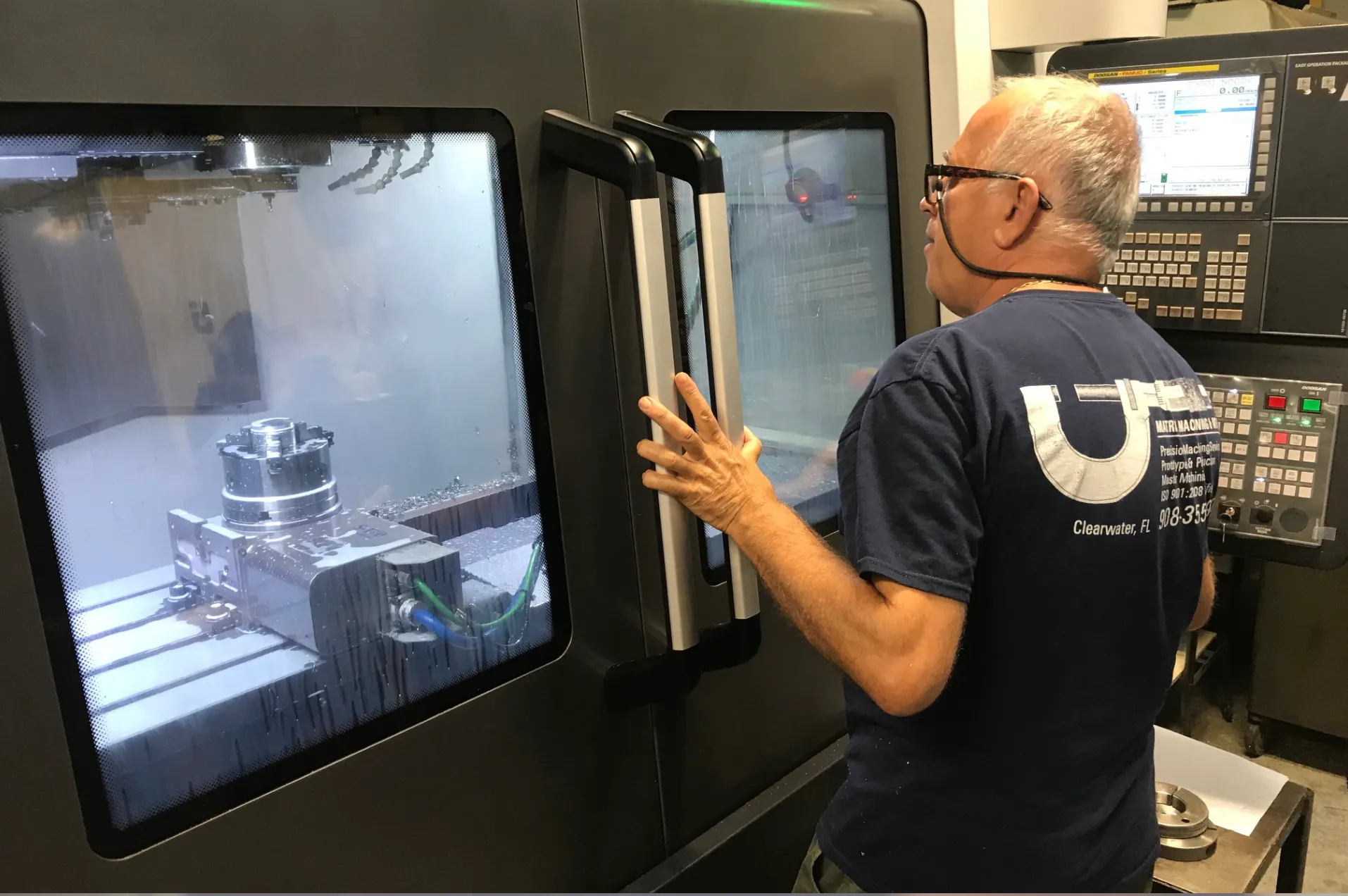
Matrix Machining is a full-service production and job shop specializing in precision custom machining. Family owned and managed with over 25 years in business, we’re located in Clearwater, FL and manufacture parts in-house using both advanced CNC equipment and manual machines.
- PDF drawing + CAD (STEP/STP preferred)
- Blueprint specs and controlled notes
- A sample part (tell us what mates and what’s critical)
- Prototype quantity or production quantity
If your print has tight fits, flag the critical-to-function features. That context helps us concentrate machining and inspection effort where it matters instead of over-machining everything.
Built for precision parts
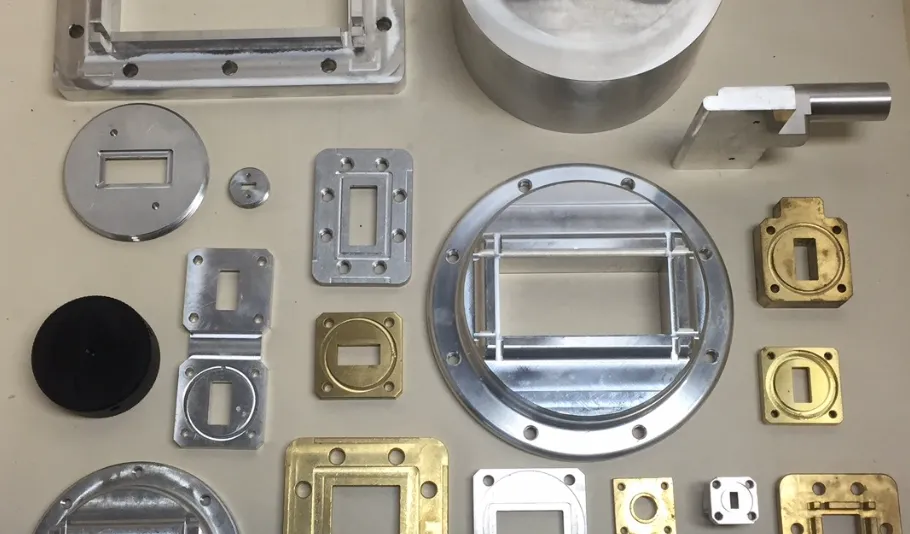
We offer prototypes and final production work based on drawings, blueprint specs, or samples. We machine many metals and plastics, and we’re equipped to meet demanding manufacturing needs that rely on repeatability and clear interfaces.
OD/ID features, bores, and fit-critical interfaces — sized to function and verified to print.
Hole patterns, pockets, slots, and locating surfaces that control assembly and repeatability.
Critical dimensions called out and checked so parts fit, align, and perform as intended.
Deburr, hone, broach, and support processes that help deliver parts ready for assembly.
What we machine
We produce components for many industries including defense, microwave wave-guide applications, pumps, valves, turbines, electronics, and more. Whether your requirements are for a large run, a small run, or a prototype, we can be your one-stop machine shop.
Common part types
- Custom machined parts built to print, spec, or sample
- Pump and valve components
- Turbine and rotating equipment components
- Microwave waveguide and precision hardware
- Electronics hardware, plates, and housings
Features we commonly machine
- Precision faces and interface surfaces
- Hole patterns, bolt circles, and locating features
- Threads, tapped holes, and hardware features
- Critical ID/OD fits as specified
- Secondary machining after fabrication (as needed)
Materials (including exotic metals)
Vast experience cutting exotic metals such as Monel, Inconel, titanium, and alloy bronzes — along with common metals and plastics. Material selection affects tooling, speeds, heat management, and inspection strategy.
Corrosion-resistant alloy often used for marine and harsh environments.
Nickel-based alloy chosen for heat resistance and demanding duty cycles.
High strength-to-weight material that benefits from careful cutting strategy.
Wear and corrosion-focused alloys used for bushings, bearings, and valves.
CNC vs manual machining
We use CNC and manual equipment because different jobs win with different approaches. The goal is always the same: deliver parts that fit, function, and repeat.
CNC machining is best for
- Repeat production and batch consistency
- Complex geometry and multiple operations
- Tight interfaces that must repeat
- Efficient setup for ongoing runs
Manual machining is valuable for
- One-offs, repair-style work, and adjustments
- Fast setup when geometry is straightforward
- Fit-up-driven work where iteration matters
- Support operations around a CNC job
Equipment list
Our equipment supports both job shop and production work. Below is a representative list of CNC lathes, CNC mills, manual machines, and supporting machinery.
CNC lathes
- Doosan Lynx 2100LB with bar feeder
- Daewoo Puma 2500LSY
- Doosan Puma 2600
- Super Kia Turn 21L
- Star 32J-B
- Citizen Cincom A20 VIPL
CNC mills
- Doosan DNM 5700 (4-Axis)
- Doosan DNM 4500
- Daewoo DMV 3016
- Ares Seiki S3030 Twin Pallet
- Kia HIV50D Twin Pallet
Manual machines
- Davidson Lathe M1788: 17″ Swing/33″ Centers
- Warner-Swasey #4 M1420 Turret Lathe
- Mazak Lathe M1968 (Hurcules/AJAX): 36″ Swing/100″ Centers
- Southbend M500 Horizontal Lathe: 24″ Swing/96″ Centers
- Bridgeport Dual Head Miller with Shaper M1980
- (2) Acer E-Mill M3VK Vertical Miller – Servo Power Feed – Newall DRO Topaz 2-Axis
- Royal MS-24B Heavy Duty Geared Head Drilling & Tapping
- Progressive Drill M4E Heavy-Duty Gear Head Drill (Keyway)
Other machinery
- Sunnen MBB-1660 Automatic Honing
- Chenlong CNC Band Saw, 16″ Cap.
- Wells MW-9 Twin-Post Band Saw
- Mini-Broach M3A Horizontal Broaching
- Trinco Dry-Blast M36/450
- Mr Deburr Tumbler
- Annealing Oven 1200 DEG
- Starrett HE400 10″ Comparator
- Mitutoyo LH600 Linear Height Gage
- Drill Press – Various
- Misc. Deburring Equipment & Machines
Quality assurance & certifications
Birl’s Light Fab operates under an AS9100 certified quality management system supporting aerospace-focused quality requirements such as traceability, controlled documentation, process control, and continuous improvement.
Birl’s Light Fab operates under an AS9100 certified quality management system supporting aerospace, defense, industrial, and precision manufacturing requirements.
- AS9100 Certified
- Aerospace Quality Standard
- Documentation & Traceability
- Process Control
- Continuous Improvement
If your RFQ includes documentation requirements (inspection notes, revision control, traceability, etc.), include those expectations up front so we can quote and execute to the requirement.
Prototype to production
We support prototypes, first articles, small runs, and repeat production work. The fastest way to improve outcomes is to call out what’s critical (datums, fits, mating features) and what can remain general.
- Prototype builds to validate fit and function
- First article / first-run verification where required
- Repeat production with controlled setup and inspection focus
- One-stop support when machining pairs with fabrication
Industries served
Precision machining shows up wherever parts must align, repeat, and perform under real conditions. We commonly support aerospace builds, electronics hardware, industrial manufacturing, marine/naval environments, and defense-related supply chains when requirements are clearly specified.
Related capabilities
Need more than machining? We often support complete builds that combine fabrication and machining so assemblies locate cleanly and bolt up without field fixes.
Photo gallery

Matrix machining FAQ
What is matrix machining (and how is it different from CNC machining)?
“Matrix machining” is how many customers refer to the Matrix Machining shop. Practically, it includes CNC machining and manual machining used together to build parts to print, spec, or sample. CNC is best for repeatability and complex geometry; manual machining is valuable for one-offs, repair-style work, and fast adjustments.
Can you machine parts from a drawing, CAD file, or sample?
Yes. A STEP file plus a PDF drawing is ideal. If you only have a sample, include the intended function, mating parts, and any critical features so we can confirm datums, fits, and what truly needs to be held tight.
Do you support prototypes and first articles?
Yes. We support prototype work, first articles, and revision-driven builds. If you flag critical-to-function dimensions and interfaces, we can focus machining and inspection effort where it matters most.
Do you support production runs?
Yes. We support small runs and repeat production. For repeat work, we focus on controlled fixturing, consistent datums, and clear revision tracking so parts stay predictable across batches.
What materials do you machine?
We machine a wide range of metals and plastics. We also have experience cutting exotic metals such as Monel, Inconel, titanium, and alloy bronzes. Share the exact alloy and condition so we can quote the right tooling and process.
What tolerances can you achieve?
Achievable tolerance depends on material, geometry, datum scheme, and how the part is fixtured. The best approach is to clearly identify critical interfaces so machining and inspection are concentrated on the dimensions that control fit and function.
Request a machining quote
Share your drawing, CAD, or sample details and we’ll review the best machining path for your tolerance and material requirements.
- Critical dimensions / fits and what the part mates with
- Material and condition (if known)
- Quantity and desired timeline
- Any documentation or inspection notes